Reviewing the Girl 100th Day SVG for Embroidery
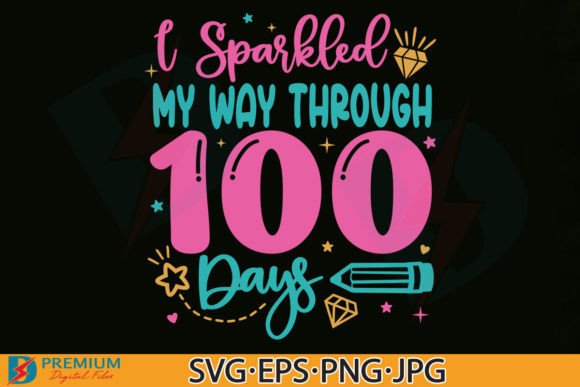
As a designer who spends half my life digitizing and the other half stitching, I have learned to look past the glossy preview images. When I first opened the 100 Days of School SVG, Girl 100th Day, my immediate reaction was not just about the cute aesthetic, but about its structural integrity for real-world application. This is a graphic asset, specifically categorized under T-Shirt Designs, but its utility extends far beyond a simple print. For those of us in the embroidery community, converting these graphics into stitched realities requires a keen eye for detail, density, and fabric interaction.
First Impressions and Visual Personality
The design carries a playful, celebratory mood that is essential for school-themed projects. The layout is balanced, with the central figure anchoring the composition. From a visual standpoint, the lines are clean, which is a promising sign for conversion. However, as an experienced reviewer, I know that what looks good on a screen does not always translate seamlessly to thread. The charm of this piece lies in its simplicity, but that simplicity can be a double-edged sword. If the details are too fine, they may get lost in the stitch; if they are too bold, they might feel heavy on delicate fabrics.
When evaluating this as a potential embroidery project, I consider the negative space. The spacing between elements suggests that it could work well for both filled areas and outline-based stitching. The personality of the girl character is friendly and approachable, making it an ideal candidate for personalized gift items or custom apparel for young students. It avoids being overly complex, which is crucial for maintaining production efficiency in a craft business setting.
Real-World Application Scenarios
Let’s move from theory to practice. Imagine you are preparing a batch of orders for a local elementary school’s milestone celebration. You decide to use this design on a high-quality cotton tote bag. The tote bag design market is saturated, but a well-executed embroidered version stands out against printed competitors. The texture of the canvas provides a sturdy base for the stitches, allowing the design to pop without sinking into the fabric.
Another viable scenario is sweatshirt embroidery. Here, the plush texture of fleece or French terry requires careful consideration of stitch density. If the design is too dense, it will create a stiff patch that feels uncomfortable against the skin. If it is too light, the background fabric will show through, ruining the visual clarity. For baby embroidery projects, such as a onesie or a soft blanket, the softness of the thread and the stability of the backing become paramount. Parents want durability, but they also want comfort. This design, with its relatively open structure, could work well if digitized with appropriate underlay stitches to prevent puckering on stretchy knits.
For Etsy sellers and small shop product creators, versatility is key. This graphic could be adapted into an embroidered patch for caps or jackets. Patches allow for higher stitch density because they are stabilized by a tough backing material before being applied to the garment. This opens up possibilities for using satin stitches on the borders to create a premium, finished look that elevates the perceived value of the finished product.
Navigating Technical Challenges
While the design is appealing, there are areas where caution is necessary. Small hoop sizes can be restrictive. If you are working with a 4x4 inch hoop, you must ensure that the entire design fits comfortably within the margin, leaving room for the frame to grip the fabric securely. Curved surfaces, like the front of a baseball cap, present another challenge. The design must be digitized with pull compensation in mind to prevent distortion when stitched on a curved, structured surface.
Textured fabrics and dark fabrics require strategic planning. On dark materials, the underlying white or light-colored threads of the design might not provide enough coverage if the stitch density is low. Conversely, on textured fabrics like terry cloth or corduroy, fine details can get swallowed by the pile. In these cases, using a cut-away stabilizer is non-negotiable. It provides the necessary support to keep the stitches upright and visible.
One specific concern with any graphic converted for embroidery is tiny lettering or intricate corners. If the original SVG contains small text elements associated with the "100 Days" theme, these must be scrutinized. In embroidery, letters smaller than 0.25 inches often become illegible. It is advisable to simplify or enlarge these elements during the digitizing process. Similarly, sharp corners in the design should be rounded slightly to prevent thread breaks and ensure a smoother stitching process.
Enhancing Product Value and Brand Trust
Using a well-chosen design like the 100 Days of School SVG, Girl 100th Day can significantly impact customer trust. When a buyer sees crisp, clean stitching with no loose threads or puckering, they associate that quality with your brand. This is particularly important for commercial embroidery clients who order in bulk. Consistency in quality builds reputation.
For digital product sellers, offering this as part of a bundle with pre-digitized files can save customers time and reduce the risk of poor conversion. However, since the product description indicates you receive PNG files and a ZIP archive, it is crucial to verify the license terms. The description mentions "Only for C," which likely implies commercial use, but you must confirm this explicitly before selling design assets or finished items. Never assume; always read the fine print to protect your business.
Practical Designer Notes for Success
Before committing to a full production run, always test the design on scrap fabric that matches your final material. Check the thread colors for contrast. A monochromatic look can be elegant, but for a school theme, vibrant colors often perform better. Use a printable mockup to visualize how the design will look on different garments before you even thread the machine.
Review the stitch density settings in your digitizing software. For a machine embroidery design derived from a graphic, you may need to manually adjust the fill stitch patterns to reduce bulk. Consider using running stitches for outlines instead of satin stitches if the lines are long and thin, as this reduces thread consumption and stiffness.
Finally, inspect the small details. Zoom in on your digital proof. Are there any overlapping colors that could cause shading issues? Is the underlay sufficient? These small checks make the difference between a hobbyist project and a professional handmade product. By treating the 100 Days of School SVG, Girl 100th Day with this level of scrutiny, you ensure that your final output is not just a decoration, but a durable, high-quality item that customers will cherish.